News

Today at 4 p.m. we invite you to Dominik Kretschmann's lecture "Krzyżowa – the power of dialogue".

The meeting with the head of the Memorial Site of the "Krzyżowa" Foundation will take place in Cracow, at the Polish Academy of Arts and Sciences (Polska Akademia Umiejętności).

The event is organized by the Foundation Zawsze Warto, and the lecture is part of the Scientific Tea Room program. Scientific Tea Room is cyclical lectures and discussions taking place to the accompaniment of classical music and a cup of good tea.

Dominik Kretschmann gave a lecture about the von Moltke family, the Kreisau Circle, Silesia and the Kreisau in Landeshauptarchiv Schwerin. The organizer of the series of historical meetings was Geschichtsverein Mecklenburg.

The goal of the association is to promote and popularize the history. For that reason, the association organizes evenings of lectures on historical, architectural, artistic, and archaeological topics.

The program of the lectures is available at http://www.geschichtsverein-mecklenburg.de/

On 17-19 May we will be hosting in Krzyżowa members of the German-Polish Society of Saxony. During their study stay, they will take part in lectures and discussions, as well as visit Lower Silesia.

Guests from Saxony will listen to the lectures given by:

  • Dr. Annemarie Franke - member of the Supervisory Board of the Krzyżowa Foundation and the Commission for the Memorial Site and the European Academy
  • Dominik Kretschmann - Head of the Memorial Site
  • Prof. Dr. Krzysztof Ruchniewicz - Director of the Willy Brandt Center for German and European Studies, University of Wrocław
  • dr Robert Żurek - Managing Director of the Krzyżowa Foundation, Director of the European Academy

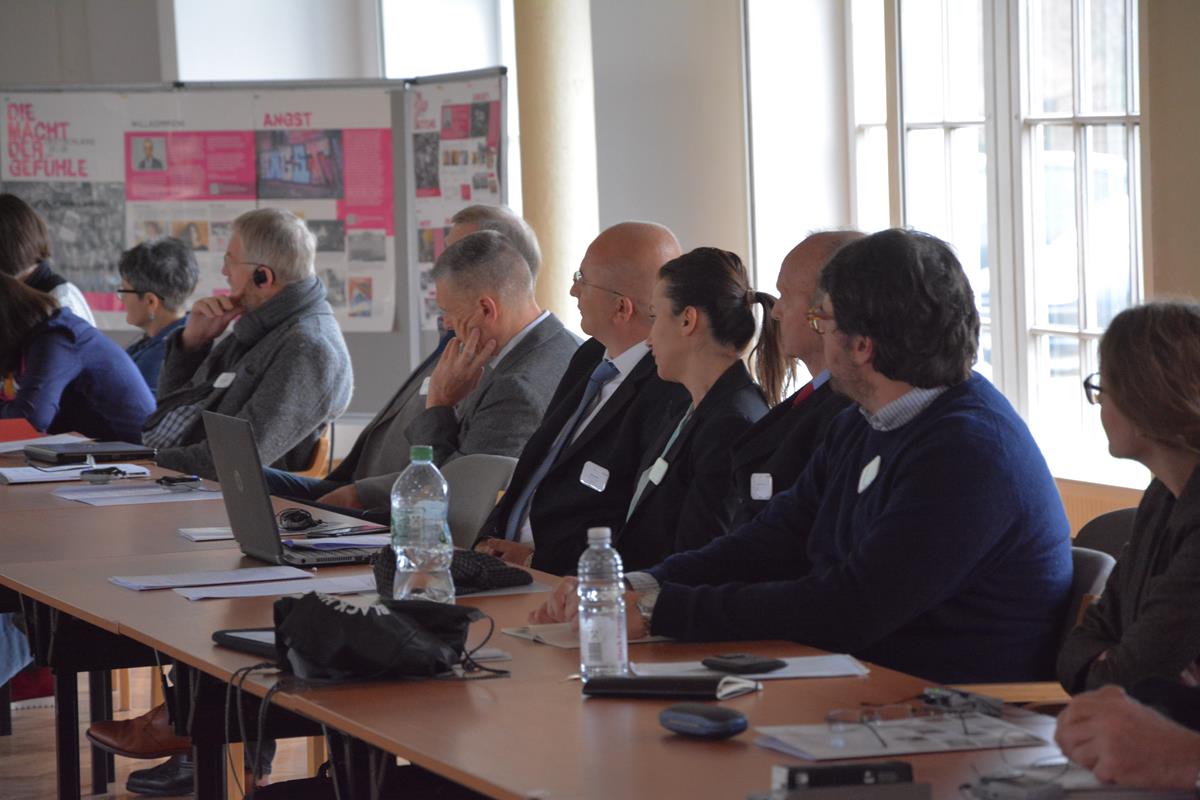
March 2017 the seminar of Memorial Sites of Eastern and Western Europe took already for the 17th time place in Krzyżowa. This year´s meeting was dealing with “Forgotten History”: Historical places, names and events that are not yet part of collective memory or have just recently become part of it. Together with more than 50 colleagues from 14 countries (stretching from Albania and Belarus to Estonia and Peru) discussions were held on how our societies deal with “forgotten history” and broad variety of projects that try to remember such events, names and places were presented.

In three blocks each participant had the opportunity to introduce themselves and their relationship to the topic in 2 minutes in front of a self-chosen photo. In these blocks one characteristic of the memorial meeting became very clear: that all participants are also speakers.

Would you like to stay up to date?

Subscribe to our newsletter and be the first to know about upcoming events!

We use cookies on our website. Some of them are essential for the operation of the site, while others help us to improve this site and the user experience (tracking cookies). You can decide for yourself whether you want to allow cookies or not. Please note that if you reject them, you may not be able to use all the functionalities of the site.