„Transformation and Dissent – Commemoration in Europe since 1989”
Memory is rarely harmonious: it is conflictual, polyphonic, and shaped by social contestation. After 1989/90, narratives about mass violence, Nazi crimes and communist rule collided in memorial sites across Eastern and Western Europe. These tensions are rooted, on the one hand, in the prescribed antifascism of the GDR and other Eastern European states, and on the other, in West German and Western European interpretations of National Socialism that long marginalized the crimes committed under communist regimes. The struggle over Holocaust remembrance and the commemoration of Stalinist mass violence was marked by processes of negotiation and gave rise to new debates about previously overlooked victim groups.
Memory does not lead to consensus but is characterized by dissent—productive when made visible and capable of sparking debate. The 2026 Memorial Conference focuses on the transformation of European sites of memory and learning after 1989/90 and asks: How have narratives, institutions, and museums changed since 1989? How controversial were these transformations locally and within their societies? What conflicts shaped them, and how are these reflected, curated, or even silenced in the histories and educational work of memorial institutions themselves?
Read more: 23rd East-West European Memorial Meeting in Krzyżowa 08 - 11 April 2026

The 22nd Eastern and Western European Memorials Seminar, which brought together experts, researchers and representatives of memory institutions from across Europe in Krzyżowa from March 19-22, 2025, has concluded. This year's edition focused on the role of images and photographs in shaping historical memory, as well as the challenges posed by the modern digital age and the development of artificial intelligence.
Key reflections and discussions
Images of Violence, the opening panel, which focused on the interpretation of photographs documenting war crimes. As one person noted: “There are many photos that do not show suffering at first glance, but the question of how to interpret them has to be answered.”
Images of the camps - a discussion of the visual documentation of execution sites and its impact on collective memory.
Images of the occupation - a conversation about the photographic record of the occupation experience and its use in the construction of historical narratives. Experts pointed out the dangers of manipulating images, noting that “propaganda only has power when we don't know history.”
Soviet monuments - the topic of the presence and removal of Soviet monuments in public space and their role in historical memory after 1990.
Study visit to Wroclaw - participants had the opportunity to analyze changes in the perception of monuments before and after 1989.
Reconciliation and visual memory - a concluding panel that discussed the importance of reconciliation gestures and their images in public debate.
Read more: 22nd Seminar of Memorial Sites in Krzyżowa - summary
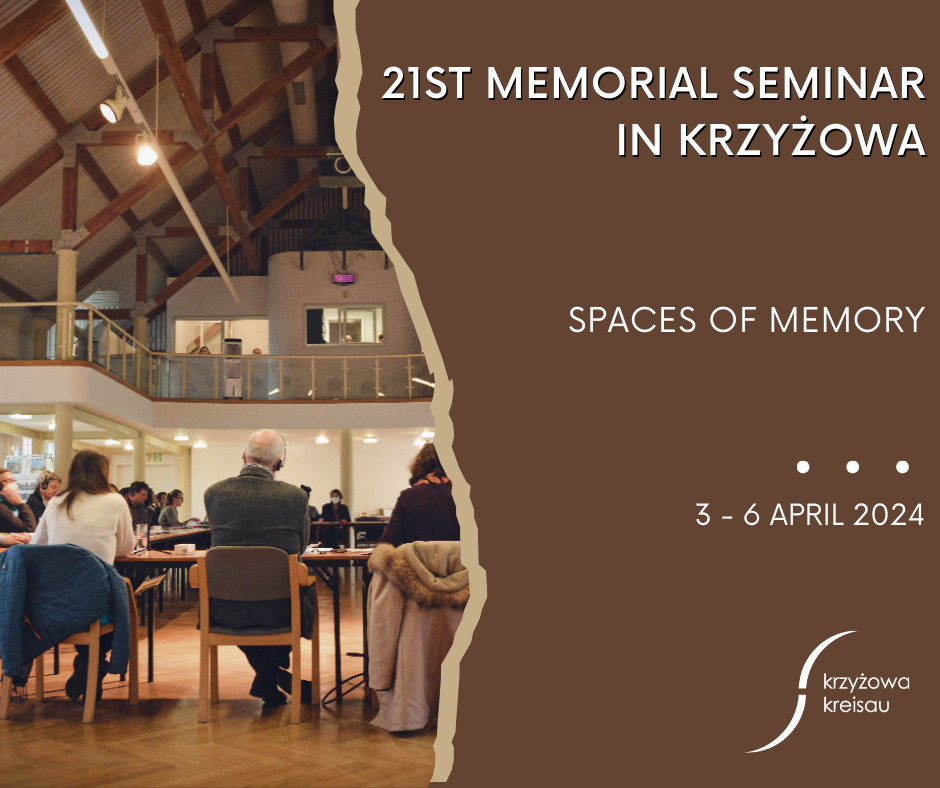 The Kreisau conference for memorial sites targets museums and memorials throughout Europe and worldwide. Its main goal is to provide a platform for experts and opinion makers in this field to exchange ideas, foster networking among facilities and institutions, with the aim of promoting stronger collaboration and encouraging critical-reflexive thinking about democratic memorial culture.
This year the conference focuses on the debates surrounding the creation of monuments. How do these monuments express experiences of dictatorship, and to what extent do they differentiate between National Socialism and Communism or remember them collectively? Furthermore, what changes occurred after the turning points in 1945 or 1989? How do memorials dedicated to victims of violence evolve over time, and what is the role of victim competition in this evolution? What is the significance of addressing crime complexes and Transitional Justice in the creation of memorial sites? What trends are evident in monuments dedicated to real or perceived heroes? How does gender history feature in memorials, both past and present? How does the formal language of memorials change over time? Lastly, the conference explores how memorials and places of remembrance contribute to the development of democratic memorial culture.
Read more: 21st Memorial Seminar in Krzyzowa "Spaces of Memory" 3 - 6 April 2024
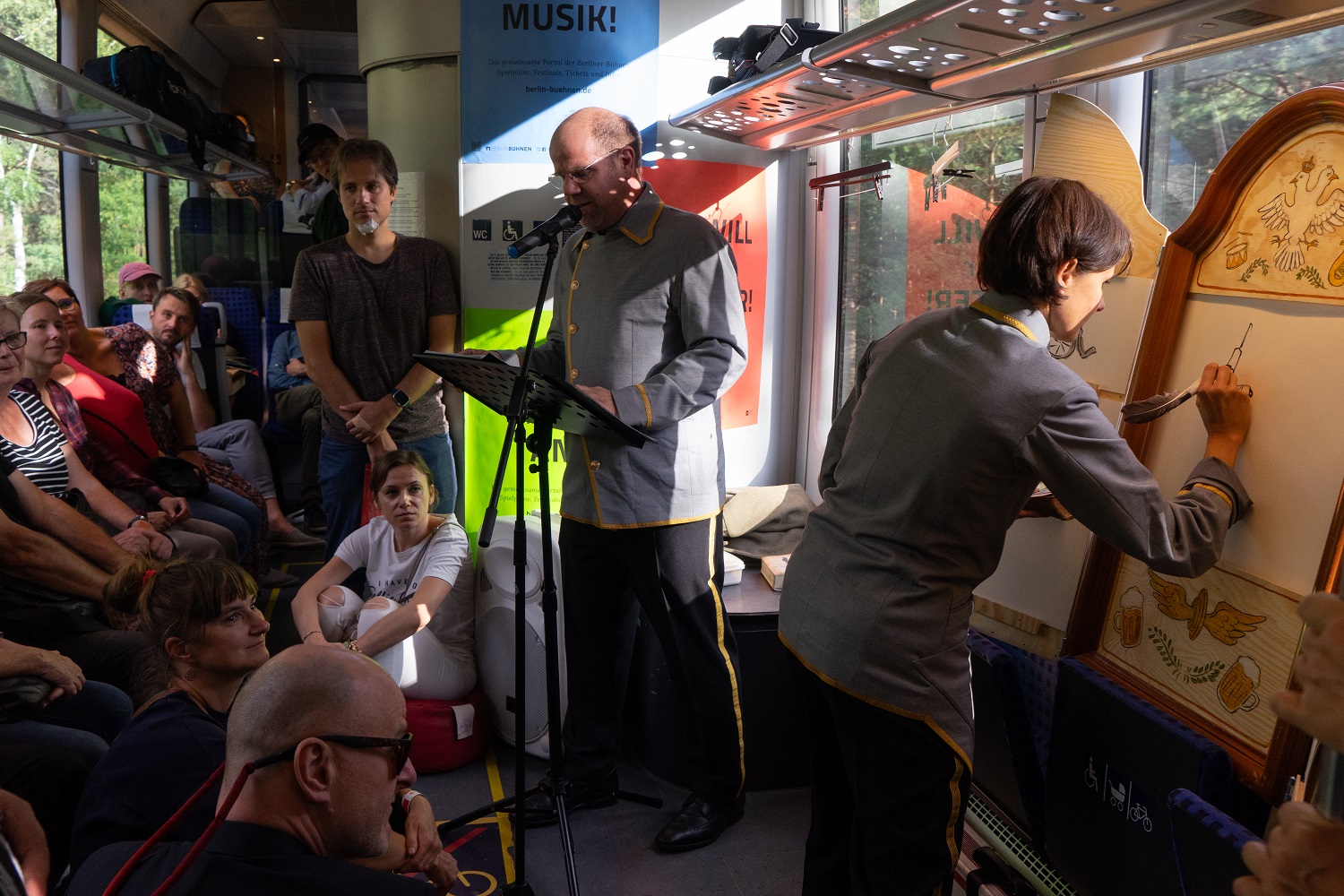
On Friday, November 24, 2023, at 2:43 pm, an exciting journey will begin at Berlin-Lichtenberg station! Krzyzowa will be the guest of the Train to Culture.
We like the idea of a Polish-German cultural train, which is now in its eighth year connecting Berlin and Krzyzowa, and the program's design gives us the opportunity to introduce Krzyzowa and all that it entails, as well as to point out that Krzyzowa can be easily reached by train.
The excursion program will be organized by the staff of our Foundation, the Kreisau-Initiative and the Freya von Moltke Foundation, and there will be, among other things, live music performed by the Smooth Acoustic Duo and a quiz that will provide all passengers with the opportunity to gain knowledge and win prizes.
Read more: Krzyżowa on the TRAIN TO CULTURE from Berlin to Wrocław